


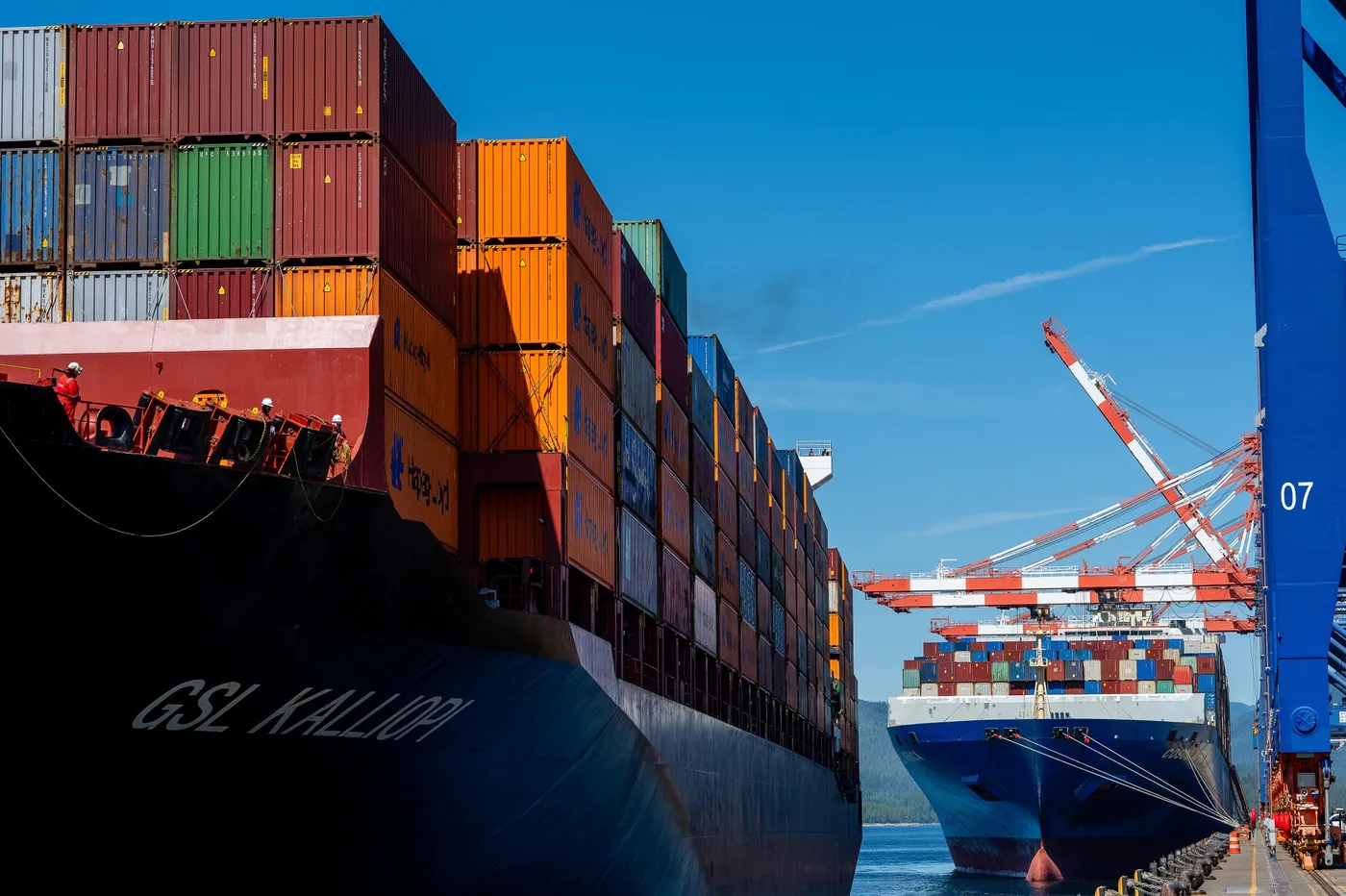
Canada’s 2026 State of Trade Report contains a single statistic that captures the country’s economic reorientation this year: exports to non-US markets now account for 32.8% of total Canadian exports — the highest share in four decades, according to Global Affairs Canada’s chief economist. That is not a marginal shift. It reflects a real reallocation of trade flows in response to US tariff policy, and it is happening fast: exports to the US dropped 3.7% in 2025, even as exports to non-US markets jumped 11.1%.
Why this matters more than the headline trade numbers suggest
Trade is not a peripheral part of the Canadian economy — goods and services trade represents roughly two-thirds of Canadian GDP, and exports alone support nearly one in five Canadian jobs, per the same Global Affairs Canada report. A structural shift of this scale in where that trade flows has implications well beyond any single sector.
The diversification is being reinforced by capital flows in the same direction: 2025 marked the first year since 2013 that foreign direct investment into Canada — $93.0 billion — exceeded Canadian investment abroad, according to the report. Services exports have also become a more central pillar of the trade mix, now accounting for close to a quarter of total exports as digital trade expands globally.
The near-term picture is more favourable than the 2025 headline suggests
Recent monthly data shows the diversification trend continuing to support growth. Canada’s merchandise trade balance held in surplus for a fourth consecutive month in June, rising to $3.9 billion, with the trade sector on track to add roughly 4 percentage points to annualized Q2 GDP growth, according to RBC Economics. That would mark a sizeable bounce-back after growth stalled over the prior two quarters — a sign that Canadian exporters are successfully adjusting to a more fragmented global trade environment rather than simply absorbing the hit from US tariffs.
What could still derail the pivot
Canada’s near-term outlook remains closely tied to the evolution of US trade policy, and the report flags elevated downside risks from ongoing Middle East geopolitical tensions and persistent global trade fragmentation, both of which could weigh on growth even as diversification proceeds, per Global Affairs Canada.
There is also a currency and policy dimension. Oxford Economics’ baseline forecast had assumed most US tariffs on Canada would be phased out by Q3 2026 as CUSMA is renegotiated, potentially dropping the effective US tariff rate on Canadian goods from 6.3% to around 1% — but that expectation has looked increasingly tenuous as talks have progressed, according to Oxford Economics’ Canada Key Themes 2026 analysis. If tariff relief is delayed or diluted, Canadian exporters will need the non-US diversification trend to do even more of the work.
Key takeaways
- Non-US markets now account for 32.8% of Canada’s total exports — the highest share in 40 years.
- Exports to the US fell 3.7% in 2025; exports to non-US markets rose 11.1% over the same period.
- 2025 was the first year since 2013 that FDI into Canada ($93.0 billion) exceeded Canadian investment abroad.
- Canada’s merchandise trade balance has held in surplus for four straight months, adding an estimated 4 percentage points to annualized Q2 GDP growth.
- The pivot’s durability depends partly on how CUSMA renegotiation resolves; a slower tariff phase-down would increase reliance on non-US diversification.
FAQ
How much of Canada’s trade now goes to non-US markets? 32.8% of total exports — the highest share in roughly 40 years, according to Global Affairs Canada’s 2026 State of Trade Report.
Is Canada’s trade balance improving? Yes — the merchandise trade balance has posted a surplus for four consecutive months through June 2026, per RBC Economics.
Will US tariffs on Canada be removed in 2026? Some forecasters had assumed a phase-down as CUSMA is renegotiated, potentially cutting the effective tariff rate from 6.3% to around 1%, but that timeline has become less certain.


