


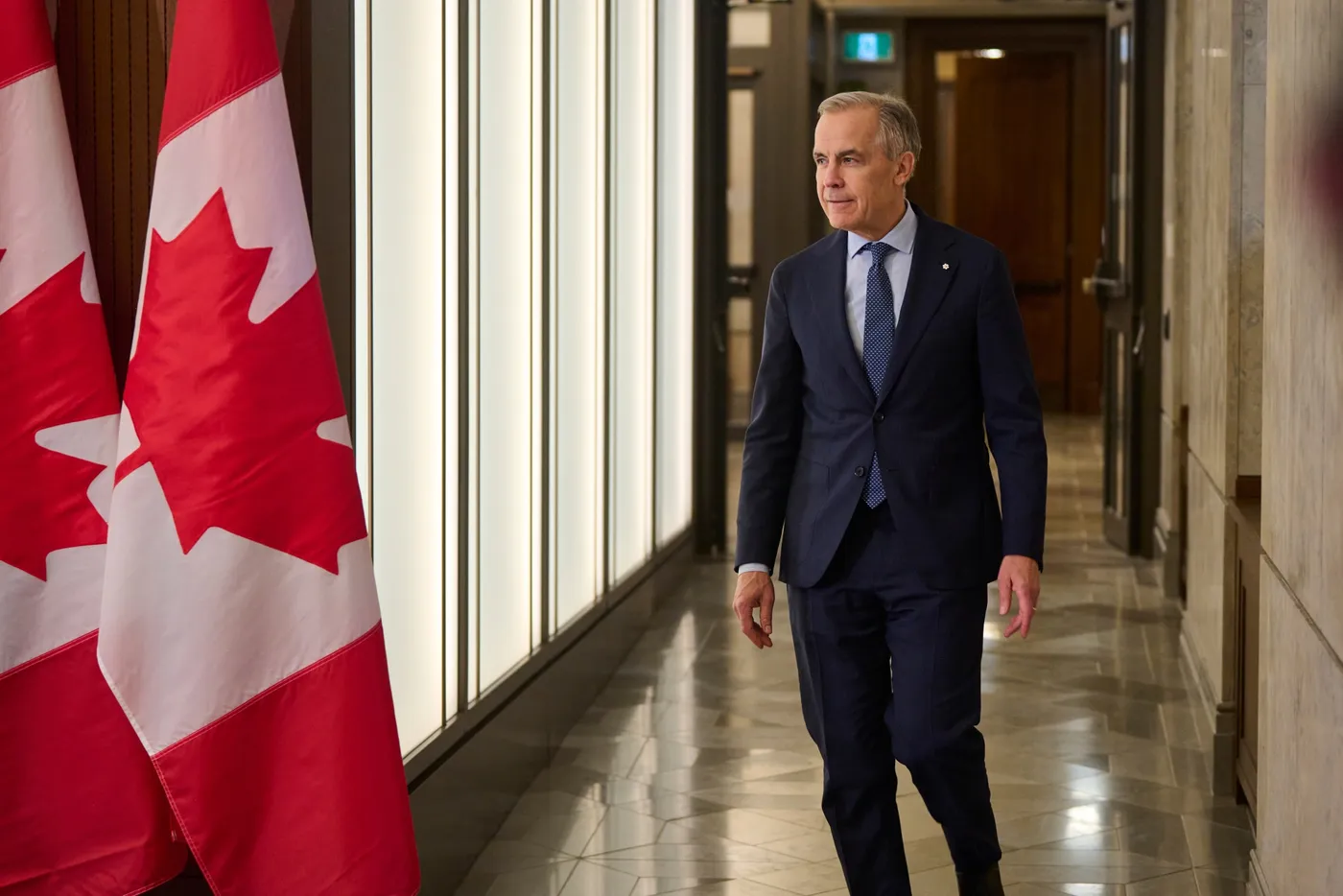
Prime Minister Mark Carney’s government is negotiating against the clock. The White House has set an August 19, 2026 deadline for a broader trade deal, and Ottawa’s urgency is compounded by economic data that gives it little room to absorb a bad outcome: Canada’s real GDP fell 0.1% at an annualised rate in the first quarter of 2026, the second consecutive quarterly decline and the technical definition of a recession (Bloomberg; Vanguard Canada).
A softer economy than the headline suggests — but also more resilient
The contraction is real but arguably overstated by temporary distortions. Vanguard’s Q3 outlook attributes part of the weakness to a surge in gold imports and a temporary slowdown in defence spending, noting that final domestic demand has actually held up better than the headline GDP figure implies (Vanguard Canada). Trade policy uncertainty tied to the United States and the fate of CUSMA continues to restrain business investment, while elevated oil prices are providing a partial offset for Canada as a major energy exporter — even as those same high energy costs squeeze household spending (Vanguard Canada).
The trade pivot away from the US
The more structurally important story may be Canada’s diversification. According to the government’s 2026 State of Trade Report, exports to the US dropped 3.7% in 2025, but an 11.1% increase in exports to non-US markets meant those markets now account for 32.8% of total Canadian exports — the highest share in four decades (Global Affairs Canada). Foreign direct investment into Canada reached $93.0 billion in 2025, the first year since 2013 that inbound FDI exceeded Canadian investment abroad (Global Affairs Canada). Services exports, boosted by digital trade, now account for nearly a quarter of total exports (Global Affairs Canada).
Trade balance holding up despite the pressure
Canada’s merchandise trade balance has held a surplus for four consecutive months through June, widening to $3.9 billion as a 28% jump in gold exports offset a price-led 10% drop in energy exports — RBC Economics estimates net trade alone is adding roughly 4 percentage points to annualised Q2 GDP growth (RBC Economics). Much of this resilience is attributable to CUSMA-compliant trade continuing duty-free alongside a growing list of US product-specific exemptions (RBC Economics).
The Bank of Canada’s holding pattern
With core inflation running close to the 2% target — CPI median and CPI trim averaging around 2.05% — the Bank of Canada has room to keep its policy rate on hold through 2026 rather than react defensively to the recession label (Vanguard Canada). Policymakers are explicitly preserving optionality given oil-price volatility, geopolitical risk and the unresolved trade negotiation (Vanguard Canada).
What the August 19 deadline actually decides
A deal secures continuity for the roughly two-thirds of Canadian GDP tied to trade and the nearly one-in-five jobs supported by exports (Global Affairs Canada). No deal — or a partial one — would land directly on an economy already contracting on paper, testing whether Canada’s non-US diversification strategy can substitute for US market access in the near term, or whether it remains a longer-horizon structural shift.


