


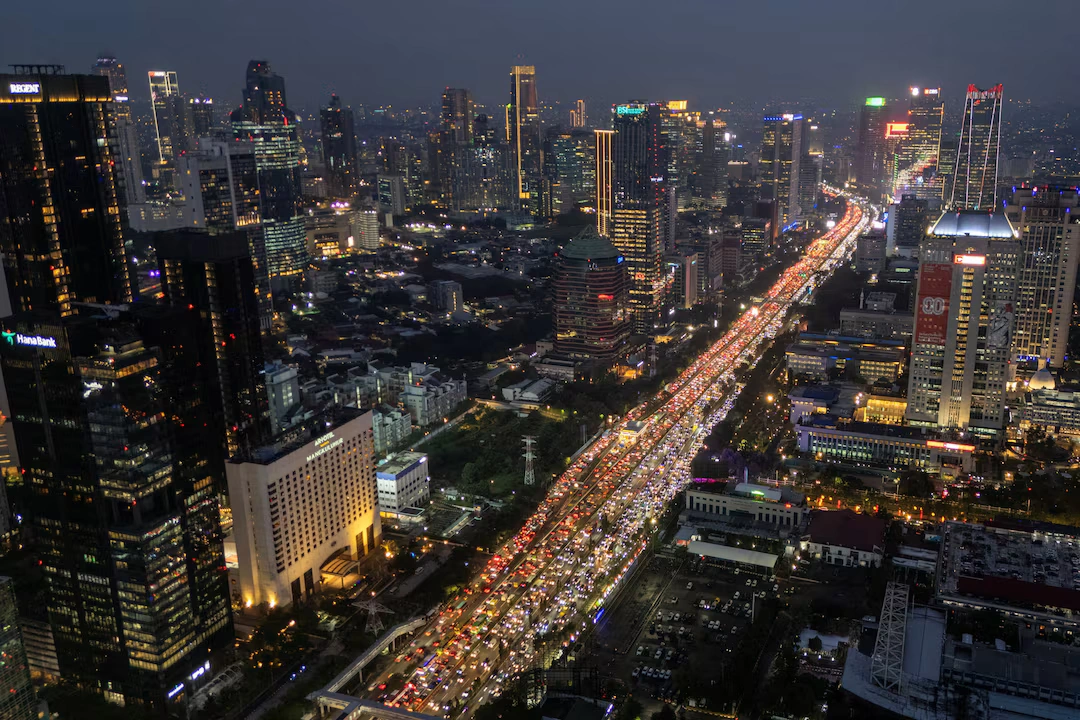
President Prabowo Subianto used Indonesia’s Independence Day address to Parliament to make his most confident economic case yet, telling lawmakers that Southeast Asia’s largest economy delivered its strongest first-half growth in thirteen years — and that 6% annual growth remains within reach despite a turbulent global backdrop.
The Strongest Half-Year in 13 Years
In his annual State of the Nation address ahead of the 2027 Draft State Budget presentation on August 14, Prabowo said Indonesia’s economy grew 5.61% in the first quarter of 2026 and 5.45% across the first half of the year — the highest first-quarter and first-half growth rates recorded in the past 13 years. “Our economy in the first half of this year achieved its highest growth in the last 13 years. Inflation remains under control, and domestic demand continues to be strong,” the president told Parliament.
Prabowo went further, telling lawmakers he is confident that “with appropriate, rational policies that utilize common sense,” growth can reach 6% by the end of the year — a target that would represent a marked acceleration from the 5.04% growth recorded in 2025.
Investment Realization at Record Pace
The president leaned heavily on investment data to make his case. He cited investment realization of Rp1,931 trillion (roughly $108 billion) throughout 2025, generating approximately 2.7 million jobs, with a further Rp1,010 trillion ($56.7 billion) realized in just the first half of 2026, absorbing roughly 1.4 million additional workers into the labour market.
On the production side, Statistics Indonesia data showed the accommodation and food service sector posted the highest growth at 11.83%, while on the expenditure side government consumption surged 18.62% — underscoring how much of the current growth impulse is being driven by state spending rather than private consumption or exports alone.
Fiscal Firepower Behind the Growth Push
Prabowo highlighted the state budget’s role in “safeguarding the national economy” amid global headwinds including soaring energy prices, high global interest rates, exchange rate volatility, and geopolitical trade disruptions. As of late July 2026, state revenue had grown 21.3% year-on-year while state expenditure increased 18.2%, with the president noting that despite the rise in spending, the budget deficit remained under control.
Nikkei Asia reported that the growth push is also being financed in part through higher dividends from state-owned enterprises — with a target of $11 billion — to fund a “downstreaming” push and acquisitions of foreign companies, a strategy that leans on Indonesia’s sovereign wealth fund Danantara to mobilise both state and private capital toward the president’s industrial ambitions.
Popular Programmes Under the Spotlight
Prabowo used the speech to defend the flagship social initiatives that have become central to his economic and political brand, including the Free Nutritious Meals programme and village cooperative schemes, which the government credits with sustaining domestic demand. He was explicit that growth alone is not the ultimate benchmark of success: “High growth cannot be enjoyed by our people; most of it is of no benefit to us,” he told Parliament, stressing that every rupiah of investment must translate into jobs and improved living standards, particularly for lower-income Indonesians.
The Skepticism Beneath the Optimism
The upbeat tone from the presidential podium sits in some tension with market anxieties that have surfaced repeatedly through 2026. Earlier in the year, investor unease over Prabowo’s economic direction — including populist spending measures, moves seen as diluting central bank independence, and aggressive posturing toward foreign businesses — triggered a stock market rout described as the steepest in three years, driven in part by rumours that respected Finance Minister Sri Mulyani Indrawati might resign. Indrawati has remained in her post, and officials worked quickly to dispel the resignation speculation, but the episode illustrated how closely markets are watching the balance between Prabowo’s growth ambitions and fiscal discipline.
The rupiah’s performance this year — including a slide to a record low beyond 18,000 per dollar earlier in 2026 amid surging oil prices tied to the separate Iran conflict — remains the most visible market signal that investors have not fully bought into the administration’s growth narrative, even as the headline GDP figures continue to impress.
Key Takeaways
- Indonesia’s economy grew 5.45% in the first half of 2026, the strongest first-half performance in 13 years, according to President Prabowo.
- Prabowo says 6% annual growth is achievable for 2026, up from 5.04% in 2025.
- Investment realization reached Rp1,010 trillion in H1 2026 alone, generating roughly 1.4 million jobs.
- State revenue grew 21.3% year-on-year as of late July, funding an expansive fiscal push including social programmes and SOE-backed “downstreaming.”
- Investor sentiment remains more cautious than the official growth narrative, reflecting concerns over fiscal discipline and central bank independence earlier in the year.
Frequently Asked Questions
How much did Indonesia’s economy grow in the first half of 2026? Indonesia’s economy grew 5.45% year-on-year in the first half of 2026, the strongest first-half performance in 13 years, according to President Prabowo Subianto.
What is Indonesia’s GDP growth target for 2026? President Prabowo has said he is confident Indonesia’s economy can reach 6% growth by the end of 2026, up from 5.04% growth recorded in 2025.
How is Indonesia financing its growth push? The government has leaned on rising state revenue (up 21.3% year-on-year), record investment realization, and higher dividends from state-owned enterprises, alongside its sovereign wealth fund Danantara.


