


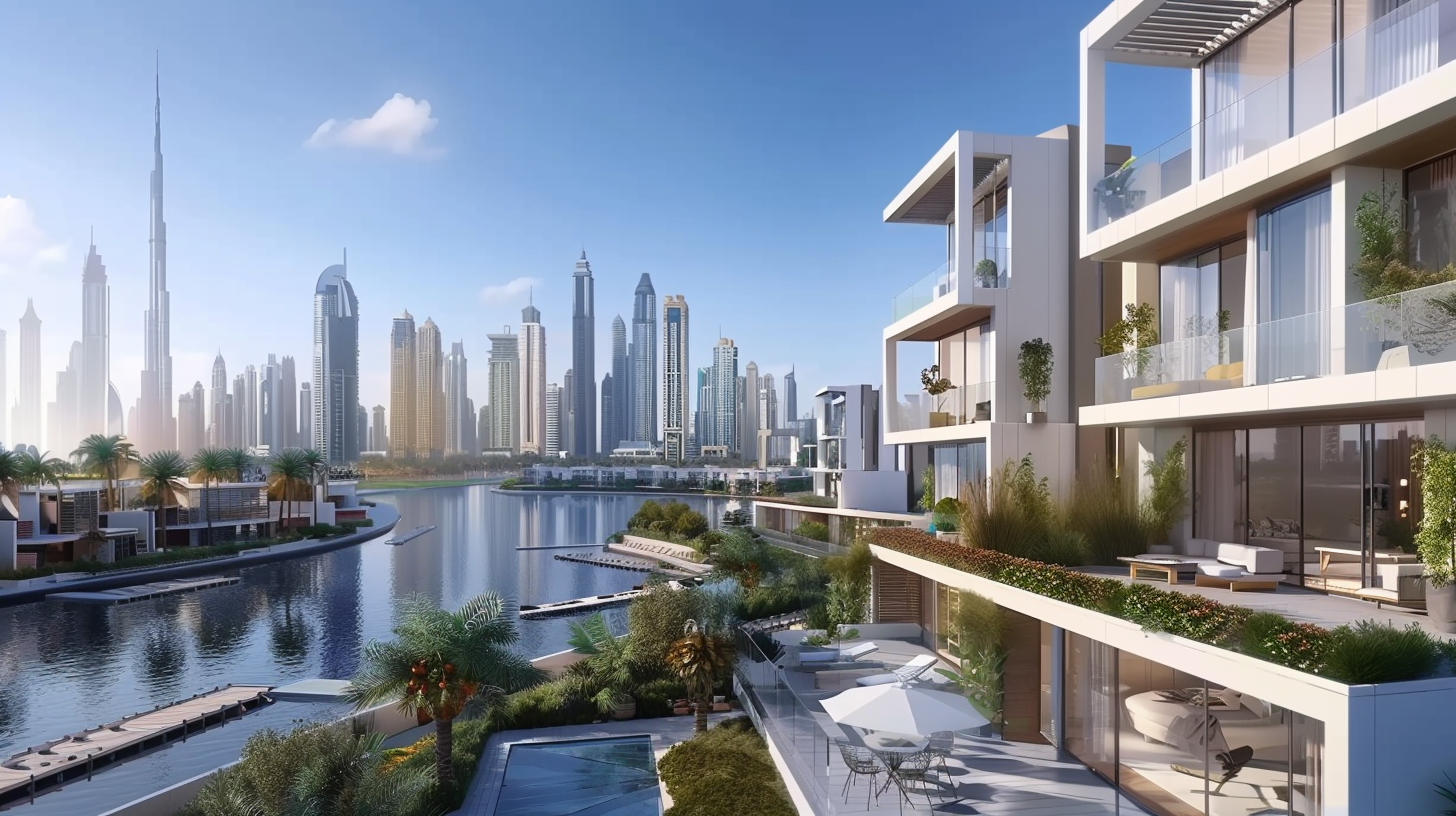
Dubai’s real estate sector has posted one of its strongest years on record even as the emirate’s tourism engine — the very force that has underpinned property demand for years — hit an unexpected air pocket. The result is a market splitting cleanly in two: residential and off-plan sales still surging, while hospitality assets face fresh pressure that some investors are treating as opportunity rather than warning sign.
A Record-Breaking Property Market
Dubai’s property market recorded AED286.4bn ($78bn) in sales and AED421bn ($114.6bn) in total transactions, according to Arabian Business’s tracking of Dubai Land Department data, with July alone contributing AED25.95bn ($7.1bn) in residential sales, more than 70% of it off-plan homes (Arabian Business). Office rents have climbed even faster: Dubai commercial rents jumped as much as 31.5% in the second quarter of 2026, driven by low vacancies and strong demand, according to JLL data cited in the same coverage.
The development pipeline tells a similar story of confidence. W Capital Real Estate Brokerage reported that the value of prospective and newly announced developments has surpassed AED275 billion ($75 billion) since the start of 2026 — the largest half-year cycle of project launches in Dubai’s history, including 250 new projects registered with the Dubai Land Department and a single Emaar Properties mega-development estimated at up to $54.4 billion (Fast Company Middle East).
The Tourism Twist
That’s the headline story. The complication is tourism — historically the engine that has fed Dubai’s property demand. Dubai recorded a record 19.6 million international visitors in 2025 with an 80.7% hotel occupancy rate, according to Global Property Guide’s residential market analysis, and property analysts had been counting on continued tourism strength to keep absorbing the roughly 100,000 residential units scheduled for delivery between 2025 and 2028 (Global Property Guide).
But that momentum broke in February 2026. According to AGBI’s reporting, U.S. and Israeli strikes on Iran abruptly derailed Dubai’s tourism trajectory, as Iranian retaliation triggered repeated safety alerts across the UAE. The disruption has been significant enough that Sylvain Vieujot, co-founder and chairman of Equitativa Group — which manages the sharia-compliant Emirates Reit — told AGBI that “hospitality is very much under pressure,” warning that hotel owners carrying heavy debt loads without a year of income “are probably going to end up in some kind of trouble” (AGBI).
Distress for Some, Opportunity for Others
Vieujot’s own read on the situation is telling: he expects “huge opportunities by the end of the year” as distressed hotel owners look to sell. It’s a classic counter-cyclical trade — investors who bought hospitality assets during years of consistently high occupancy, when running them looked easy, are now facing a very different calculus with a full year of depressed income against fixed debt obligations.
Why the Residential Market Hasn’t Cracked
The apparent contradiction — a tourism slump alongside record property sales — is explained by Dubai’s underlying demand base extending well beyond short-term visitors. Dubai recorded 320 home sales worth more than $10 million in the first half of 2026, up 23% year-on-year, with ultra-prime transactions reaching $6 billion, according to Arabian Business — a segment driven by long-term wealth migration and residency programs rather than tourist footfall. Analysts covering the sector broadly agree that population growth and continued international capital allocation to Dubai real estate are absorbing new supply even as tourism-linked hospitality assets face a genuinely different set of pressures (The Traveler).
What to Watch
The critical variable is the same one shaping nearly every other market on this list: the trajectory of the Iran conflict and any resulting Strait of Hormuz shipping disruptions. A durable de-escalation would likely restore Dubai’s tourism numbers relatively quickly, given the emirate’s track record of rapid demand recovery after past shocks. Until then, expect a bifurcated market — residential and prime real estate continuing to set records, while hospitality assets sort themselves into buyers and sellers along starkly different risk tolerances.
Is Dubai’s real estate market still strong in 2026?
Yes — Dubai posted AED286.4bn ($78bn) in property sales in 2026, even as a tourism dip tied to the Iran conflict has created distressed-hotel buying opportunities in the hospitality segment specifically.

