


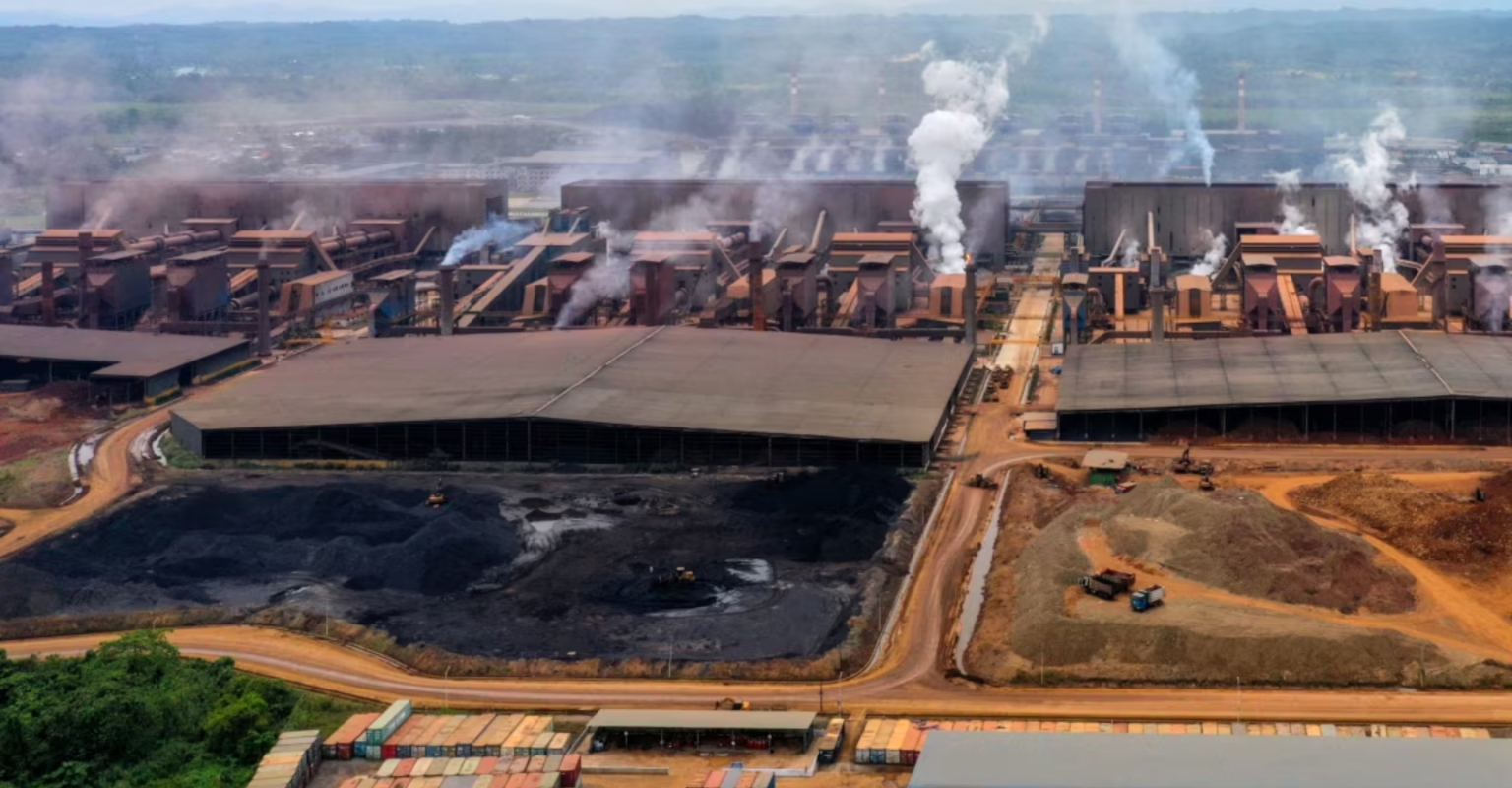
Indonesia has begun transferring control of its key commodity export transactions from private companies to its sovereign wealth fund, in a move one outlet described as jolting China with what amounts to a “hostile takeover” of strategic trade flows. From June through August 2026, private firms are expected to hand over their import and export transactions to Danantara, which should be managing all foreign trade transactions in these commodities by September, according to Fortune’s reporting.
The vehicle behind the shift
The new entity handling the transition, PT Danantara Sumberdaya Indonesia, was registered the day before President Prabowo Subianto’s announcement and is 99% owned by Danantara — the roughly $900 billion sovereign wealth fund Indonesia launched in February 2025, according to the same Fortune report. Indonesia’s Ministry of Foreign Affairs has characterized the move as “a governance reform… toward strengthening our credibility in managing strategic commodity trade in an orderly and accountable manner,” rather than an outright nationalization.
Why nickel is the center of gravity
Nickel sits at the heart of the shift because Indonesia is the world’s largest supplier of the metal used in electric vehicle batteries. Danantara has already moved well beyond passive fund management into direct industrial investment: it is in talks with French miner Eramet to jointly develop a nickel processing plant in North Maluku’s Weda Bay Industrial Park, according to Yieh’s steel industry coverage, and separately agreed to invest in a $1.4 billion nickel smelter being developed with Chinese battery maker GEM and Brazilian miner Vale, per reporting via MEXC.
The tension with China
The commodity-export overhaul has not gone unnoticed in Beijing. In May 2026, the China Chamber of Commerce in Indonesia sent an open letter to President Prabowo warning that abrupt policy shifts — including mining-quota cuts and new foreign-exchange retention rules — were undermining Chinese investor confidence, according to Asia Times. Danantara’s response has effectively been to demonstrate it can operate the midstream nickel supply chain — precursor materials, cathodes, specialty chemicals — without depending entirely on Chinese capital and expertise, positioning MIND ID and domestic private firms as co-owners rather than junior partners.
A fund with a broadening mandate
Danantara’s ambitions extend well past nickel. Since its founding, the fund has financed cash-strapped national carrier Garuda, invested in a $800 million chemical plant project near Jakarta, and outlined 26 downstream projects worth roughly $12.4 billion spanning mining, metals, energy, and agriculture, according to Asia Times’s earlier reporting on the fund’s turbulent first year via Bloomberg. The fund has also sought to raise 50 trillion rupiah (roughly $3 billion) through “Patriot Bonds” sold to wealthy Indonesian business families — a nation-building financing model distinct from how most sovereign funds raise capital.
Why this matters beyond Indonesia
Danantara’s commodity-export consolidation is a case study other resource-rich emerging economies are watching: a state fund moving from passive shareholder to active controller of trade flows in a strategic sector, timed to coincide with a broader US-Indonesia trade agreement covering critical minerals access. It also sits directly alongside the global rare-earth and critical-minerals contest between the US and China (see our companion report), giving Jakarta unusual leverage in negotiations with both powers simultaneously.


