


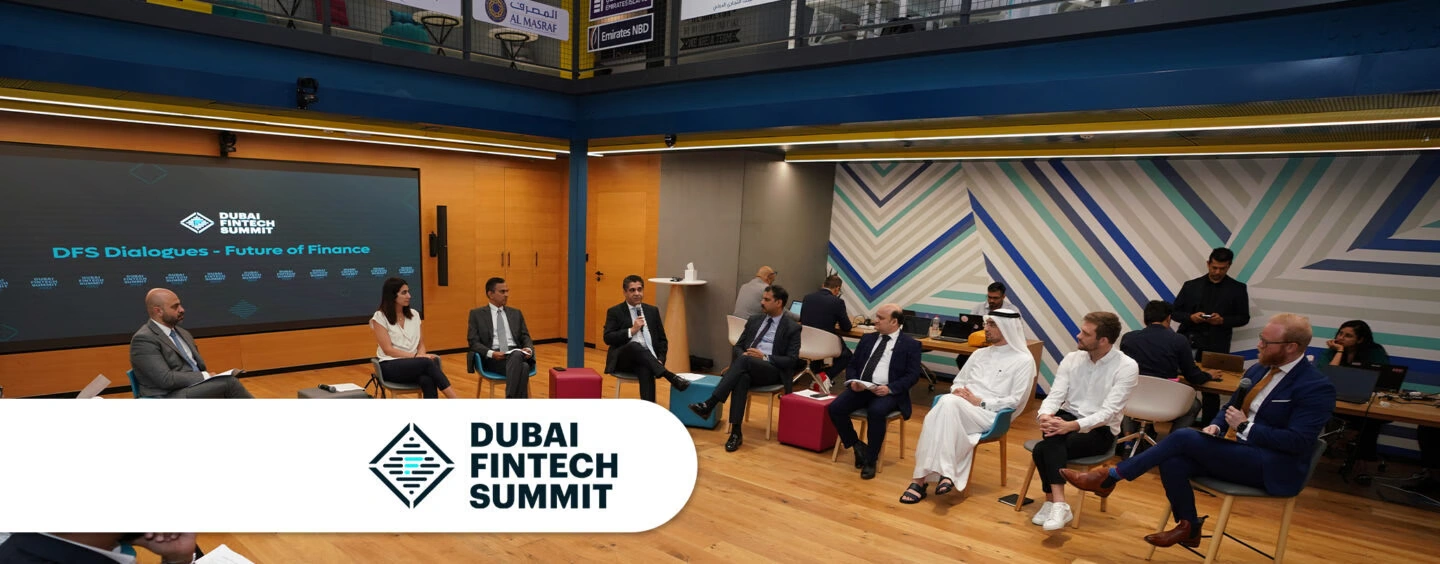
Dubai International Financial Centre is taking its flagship Dubai FinTech Summit abroad for the first time — and it picked Pakistan. The Pakistan FinTech Summit, running August 18-19, 2026, in partnership with the Pakistan Digital Authority, is expected to draw more than 10,000 participants and up to 150 sponsors and exhibitors, according to DIFC’s official announcement.
A hub at its strongest, looking for its next market
The timing is notable. DIFC just reported its strongest first half on record: 361 new companies joined its Innovation Hub in H1 2026, a 39% year-on-year jump, while total active registered companies climbed to 10,018 — up 30% over the prior 12 months, according to DIFC’s H1 2026 results announcement. Regulated financial services firms grew 16% to 1,134, reinforcing DIFC’s position as the largest financial services ecosystem across the Middle East, Africa, and South Asia region.
Rather than simply absorbing more firms into Dubai itself, DIFC is now exporting its convening power. Arif Amiri, DIFC Authority’s chief executive, described Pakistan as “a rapidly emerging FinTech hub” and framed the summit as part of DIFC’s ambition to “lead the global dialogue on financial innovation,” per the official release.
Why Pakistan, and why now
The choice reflects more than goodwill. Pakistan has spent the past year building the regulatory scaffolding to absorb this kind of attention: its Parliament approved the Virtual Assets Bill in March 2026, formally establishing the Pakistan Virtual Assets Regulatory Authority, according to the IMF’s staff country report on Pakistan. That regulatory build-out is happening in parallel with Pakistan’s IMF-monitored fiscal reforms (see our companion report on Pakistan’s IMF program), giving Gulf capital a clearer legal environment to engage with than in prior years.
The bigger Gulf-South Asia pattern
This is not an isolated data point. DIFC has separately been expanding physical capacity to absorb continued inflows — adding 1.6 million square feet of commercial space between 2026 and 2027 through projects including an AI Campus and the Zabeel District expansion, according to Gulf News’s coverage of DIFC’s Q1 2026 growth. Read together, the Pakistan summit looks less like a one-off event and more like the export phase of a hub that has run out of room to simply grow inward.
Why this matters for investors and operators
For fintech operators and investors watching South Asia, the summit functions as a signal event: Gulf institutional capital, regulatory expertise, and deal flow are being actively routed toward Pakistan’s digital financial ecosystem rather than treating it as a frontier market to approach cautiously. For Pakistan, hosting the first international expansion of a marquee Dubai event is a reputational marker as much as a commercial one, arriving at a moment when the country is trying to demonstrate reform credibility to both the IMF and outside investors simultaneously.


