


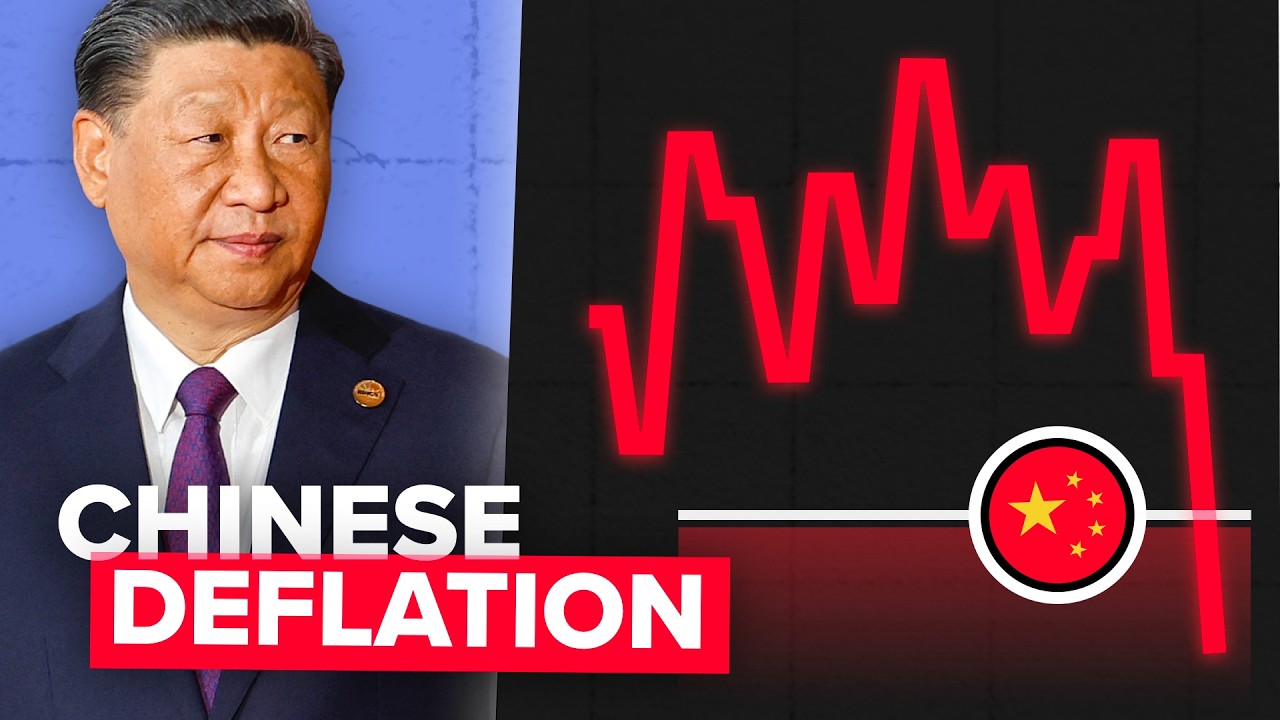
China has now recorded roughly ten consecutive quarters of deflationary pressure — the longest such stretch since the country’s transition to a market economy in the late 1970s, according to Statistics of the World’s analysis of China’s 2026 economy. Consumer price inflation averaged 0% in 2025 and is forecast at just 0.8% in 2026, far below Beijing’s 2% target, even as the economy’s headline GDP figure remains large — an apparent contradiction that says more about where the growth is coming from than about underlying demand.
The property collapse at the root of it
The mechanism is by now well documented but still deepening. Existing home prices had fallen 22.5% from their 2021 peak as of April 2026, with new home prices down 13.2% and transaction volumes off 53.8% over five years, according to National Bureau of Statistics data cited by The Economy. S&P Global Ratings expects primary home prices to fall a further 1.5% to 2.5% in 2026, with secondary prices dropping 4% to 5%.
Household wealth destruction from the property slump has been compared to the scale of the US 2008 crash, except still accelerating rather than resolving, according to Eurasia Group’s top-risks analysis. The same analysis argues Beijing “won’t do anything to stop it” in any decisive way, with President Xi Jinping prioritizing political control and technological supremacy ahead of the 21st Party Congress in 2027 over the consumption stimulus that could break the deflationary cycle.
Beijing’s bet on high-tech manufacturing
Rather than directly rescuing property or consumption, Chinese policy has leaned on state-driven investment in high-tech manufacturing to fill the demand gap. That strategy has instead produced overcapacity, since weak domestic demand means there are not enough buyers to absorb the resulting supply, per the Eurasia Group analysis. Youth unemployment reached 16.9% even as the broader economy posted 4.5% GDP growth in 2026, according to the Statistics of the World analysis — a divergence between headline growth and lived economic conditions that increasingly defines China’s macro story.
The Japan comparison — with limits
Analysts increasingly draw a parallel to Japan’s “lost decades”: a burst property bubble, deflationary pressure, an aging population, and manufacturers competing on price rather than innovation. But the comparison has real limits, not least China’s far larger export base and its ongoing push into AI and advanced manufacturing as an alternative growth engine, even as that push itself contributes to the overcapacity problem, per the same analysis.
Why the world can’t look away
China’s deflation exports itself. As Chinese manufacturers cut prices to move excess inventory abroad, they compress margins for competitors from Southeast Asia to Europe — a dynamic already visible in Malaysia’s electronics sector and in the price pressure facing chipmakers navigating both Chinese competition and US export controls (see our companion report on rare earth restrictions). Persistent Chinese deflation also complicates the US Federal Reserve’s own inflation calculus, feeding into global rate-setting decisions well beyond Beijing’s borders.


