


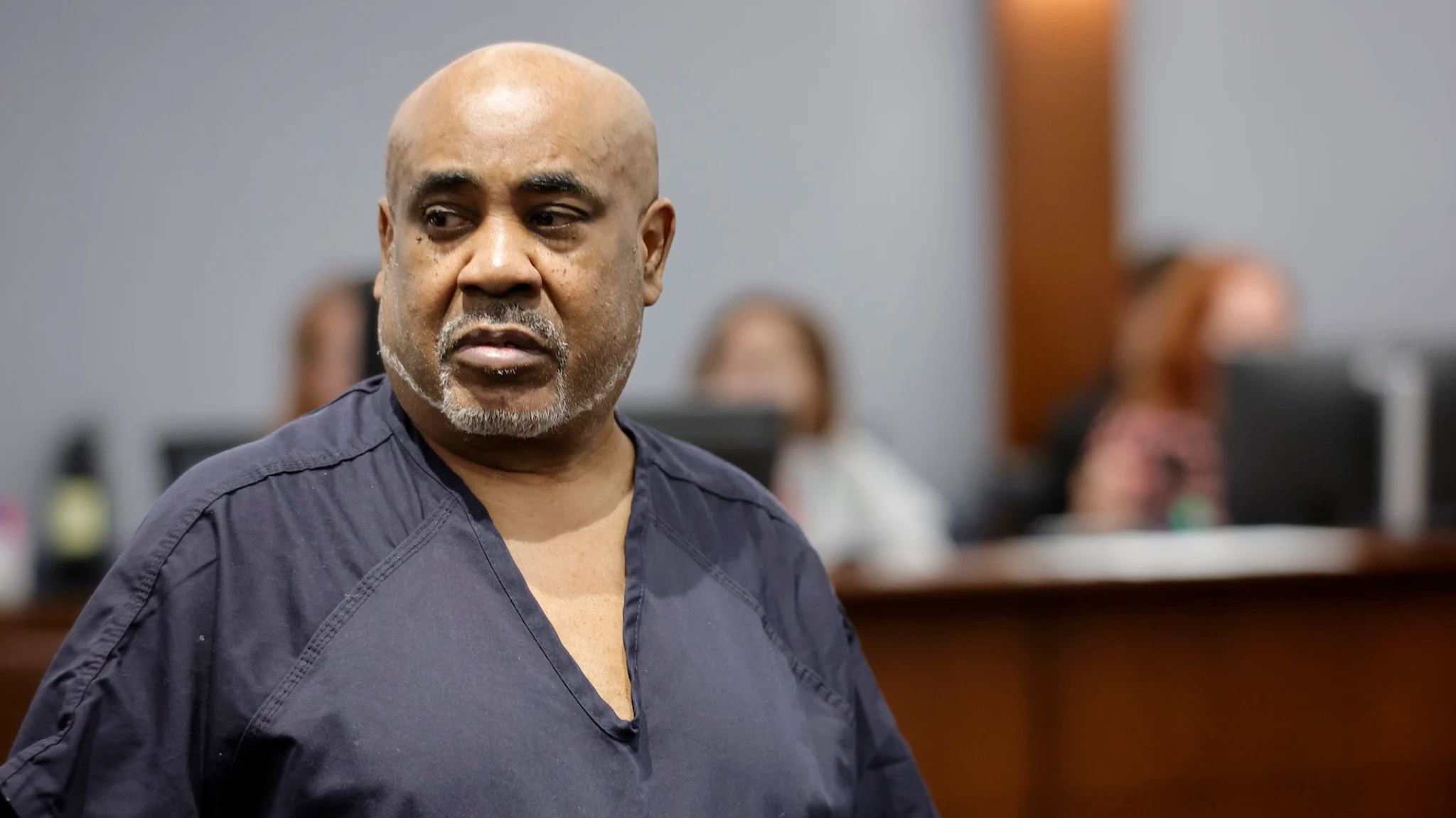
A Las Vegas jury convicted Duane “Keffe D” Davis of first-degree murder on August 31, 2026, for orchestrating the 1996 drive-by shooting that killed hip-hop icon Tupac Shakur — closing, after just under three hours of deliberation, one of the most high-profile unresolved killings in American cultural history, thirty years after the crime and roughly three weeks after the trial itself began in a cramped Las Vegas courtroom.
The Verdict and What It Means
Jurors found Davis guilty of first-degree murder with a deadly weapon, with the added finding that the killing was committed with the intent to promote, further, or assist a criminal gang. Davis is the only person ever formally charged in connection with Shakur’s September 7, 1996, murder, following his 2023 indictment nearly three decades after the crime. He faces the possibility of life in prison without the possibility of parole; Judge Carli Kierny scheduled sentencing for October 13, 2026.
As the verdict was read, Davis briefly raised his fist toward the audience before exiting the courtroom, appearing largely straight-faced. Shakur’s sister, Sekyiwa “Set” Shakur, was seen crying quietly while holding hands with other family members present for the reading.
How the Trial Unfolded Over Three Weeks
The trial of Duane Keith Davis began August 10, 2026, with opening statements in Clark County District Court in Las Vegas, following years of delays — the case was originally set to begin in March 2025 before being pushed first to February 2026 and then further, as defense attorneys sought additional time to investigate new evidence and interview witnesses. Prosecutors opened by describing Shakur’s killing as “an act of revenge,” arguing Davis had shown “visceral anger” toward Shakur for years leading up to the shooting. The defense, by contrast, argued from the outset that the case suffered from a lack of hard facts given the three-decade gap between the crime and the trial.
Over roughly a week and a half of testimony, prosecutors called 25 witnesses in an effort to reconstruct the events leading to Shakur’s death, including an officer who had pulled over Marion “Suge” Knight and Shakur on the night of the shooting, a woman who was in the vehicle ahead of Knight and Shakur when the shooting occurred, and Leonard Jefferson, the man believed to have taken the final photograph of Shakur before his death. Prosecutors rested their case on August 26, 2026.
The Central Theory: Retaliation and a Borrowed Gun
According to testimony and evidence presented at trial, prosecutors alleged the shooting stemmed from retaliation for a physical altercation between Shakur and Davis’ nephew, Orlando Anderson, following a Mike Tyson boxing match earlier that night. Prosecutors contended that Davis provided the firearm used in the shooting to Anderson, who was seated in the back seat of the vehicle Davis was riding in when the shots were fired. Anderson took the weapon and began firing, according to accounts Davis himself had previously given in interviews and in his own 2019 memoir, “Compton Street Legend.” Anderson was long considered a prime suspect in the case but was never charged; he denied involvement before being killed in an unrelated shooting in Compton in 1998, at age 23.
Closing Arguments: “Mastermind” vs. “Fiction”
In closing arguments delivered Monday, August 31, Clark County Deputy District Attorney Binu Palal cast Davis as the mastermind behind the shooting, telling jurors: “This was a case about gang retaliation and revenge,” and arguing the prosecution’s case was “drenched with circumstantial evidence” beyond Davis’ own public statements. Palal specifically addressed the credibility of Davis implicating his own nephew, arguing it made sense “as a truth to get out of a life sentence,” since “it makes no sense ‘to put that smut’ … on somebody that you love.”
Davis’ defense countered that his client had spent nearly 18 years telling police, television producers, authors, YouTube interviewers, and “anybody that will listen” that he was responsible for Shakur’s murder — and argued that without those public statements, which the defense characterized as unreliable, there simply wasn’t enough hard evidence to convict. The defense labeled the prosecution’s case “a fiction” built almost entirely on stories Davis told for money and attention rather than verified physical evidence.
Timeline of the Case
| Date | Development |
|---|---|
| September 7, 1996 | Tupac Shakur shot in a drive-by attack in Las Vegas; dies six days later |
| 1998 | Orlando Anderson, long-suspected gunman, killed in unrelated Compton shooting |
| 2019 | Davis publishes memoir “Compton Street Legend,” detailing his account of the murder |
| September 2023 | Davis indicted and charged with first-degree murder, the only person ever charged |
| February 2025 → 2026 | Trial repeatedly postponed for additional evidence and witness investigation |
| August 10, 2026 | Trial begins with opening statements in Las Vegas |
| August 26, 2026 | Prosecution rests after calling 25 witnesses |
| August 31, 2026 | Jury convicts Davis of first-degree murder after ~3 hours of deliberation |
| October 13, 2026 | Sentencing scheduled |
Why This Case Reshapes Hip-Hop’s Most Enduring Cold Case
Shakur’s murder has stood for three decades as one of the most examined unsolved crimes in American popular culture, generating documentaries, books, and endless amateur investigation precisely because no one had ever been held legally accountable. Davis’ 2023 indictment marked the first time prosecutors moved from decades of public speculation — much of it fueled by Davis’ own repeated public confessions in interviews and his memoir — into an actual criminal case. His conviction now provides the legal closure that eluded the case for nearly thirty years, even as questions about who physically fired the fatal shots remain unresolved in the public record, since Anderson, the alleged shooter, died in 1998 without ever facing charges.
For Shakur’s family, many of whom attended proceedings throughout the trial, the verdict represents a rare instance of a high-profile, culturally significant murder case reaching a definitive legal conclusion decades after the fact — a resolution that legal commentators have noted is exceptionally uncommon for cold cases of this age and public prominence.
Key Takeaways
- Duane “Keffe D” Davis was found guilty of first-degree murder on August 31, 2026, for orchestrating Tupac Shakur’s 1996 killing.
- Davis is the only person ever charged in Shakur’s death; sentencing is set for October 13, 2026, with a possible life sentence without parole.
- Prosecutors alleged Davis provided the gun used by his nephew, Orlando Anderson, in a retaliation shooting; Anderson died in 1998 without being charged.
- The trial, which began August 10, 2026, followed years of delays after Davis’ 2023 indictment, nearly 30 years after the crime.
- Much of the prosecution’s case relied on Davis’ own years of public statements, interviews, and his 2019 memoir detailing his alleged role.
Frequently Asked Questions
Who was convicted of Tupac Shakur’s murder? Duane “Keffe D” Davis was convicted of first-degree murder on August 31, 2026, for orchestrating the 1996 shooting.
When will Duane Davis be sentenced? Sentencing is scheduled for October 13, 2026, before Judge Carli Kierny in Clark County District Court, Las Vegas.
Who actually fired the shots that killed Tupac Shakur? Prosecutors alleged Davis’ nephew, Orlando Anderson, was the shooter, based partly on Davis’ own account. Anderson was never charged and was killed in an unrelated shooting in 1998.


