


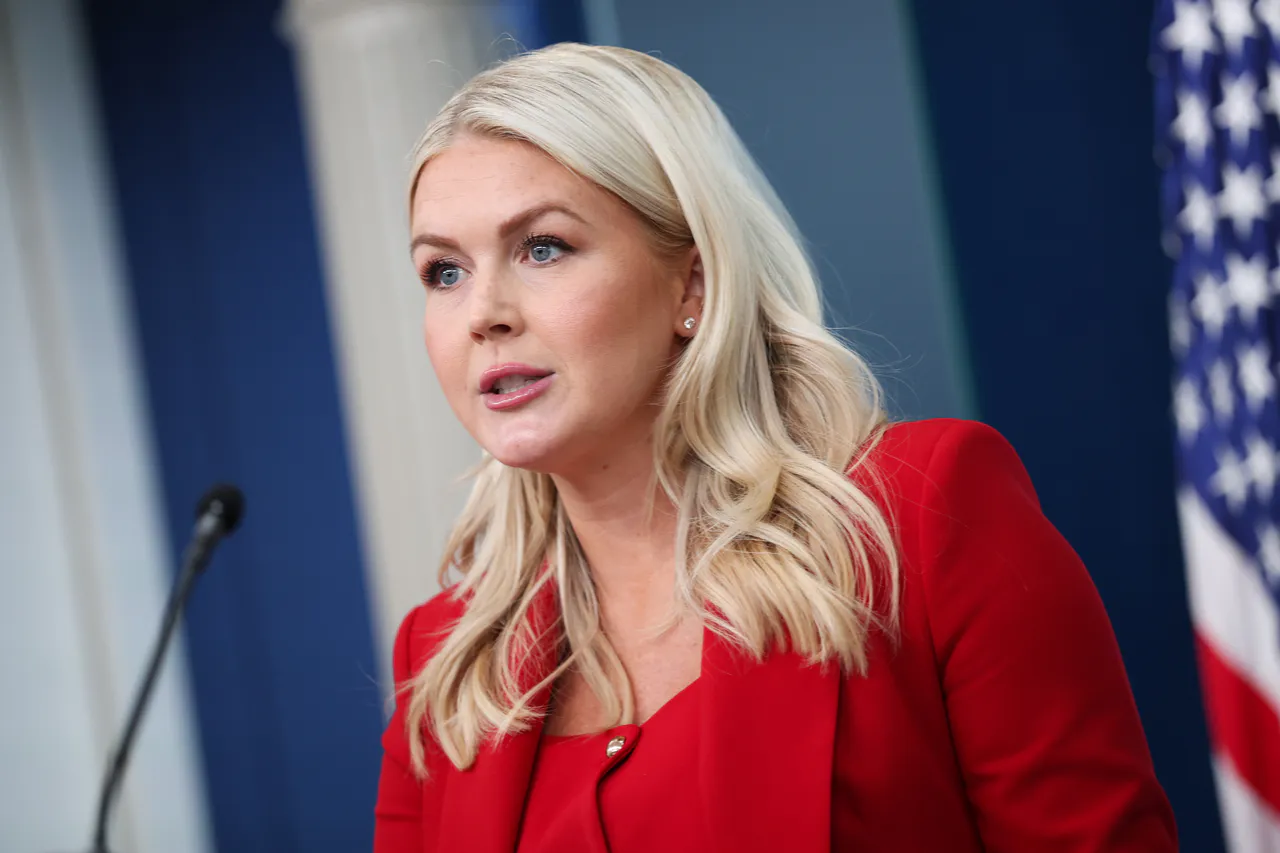
Karoline Leavitt departs as White House press secretary at the end of August. With no successor named yet, here’s who has filled in before and what her exit means for Trump’s midterm messaging.
President Trump’s announcement that Karoline Leavitt will depart as White House press secretary at the end of August has opened one of the more consequential — and currently unanswered — staffing questions of the midterm season: who takes the podium next, and how will the administration’s communications strategy shift heading into November.
Why Leavitt Is Leaving
Leavitt, 28, confirmed her own decision in a lengthy X post shortly after Trump’s announcement, describing it as a “bittersweet decision” rooted in the difficulty of balancing the role with raising two young children, including a daughter born in May — making her the first White House press secretary to give birth while serving in the position. “I have felt in my heart that I cannot be the best mom my two young children deserve while devoting the constant time, energy, and attention required of the White House Press Secretary,” she wrote, adding that the role had been “the honor and adventure of a lifetime.”
Trump, announcing the move on Truth Social, called Leavitt “one of my most trusted aides” and said she would become “one of my top outside advisors, and an influential voice within the Republican Party, as we work to defy History, and conclusively win the Midterm Elections” — explicitly tying her new role to the party’s 2026 campaign operation rather than removing her from politics altogether.
Karoline Leavitt, the youngest White House press secretary in history, will leave her role at the end of August 2026 to spend more time with her two young children. Trump has not yet named a successor; Vice President JD Vance, Secretary of State Marco Rubio, and Treasury Secretary Scott Bessent have all previously filled in at the podium during her parental leave.
A Historic, Combative Tenure
Leavitt became the youngest White House press secretary in American history when she took the podium in January 2025 at age 27, having previously served as national press secretary for Trump’s 2024 campaign and in the press office during his first administration. Her tenure was defined in part by briefing from the podium less frequently than many of her recent predecessors, and by a more openly adversarial posture toward segments of the traditional press corps — an approach that dovetailed with the administration’s broader effort to expand credentialing and access for independent and influencer-style media alongside legacy outlets.
She returned to the briefing room this summer after parental leave following the birth of her second child, and had recently pledged that Trump would deliver an “entertaining” speech at his return to the White House Correspondents’ Dinner — a sign, allies say, that she intended to remain a visible fixture of the administration’s public messaging even after stepping back from the daily podium duties.
Who Could Take the Podium Next
The White House has not yet named a successor. During Leavitt’s earlier parental leave, a rotating cast of senior officials handled briefing duties, including Vice President JD Vance, Secretary of State Marco Rubio, and Treasury Secretary Scott Bessent — any of whom could plausibly signal the administration’s intent if tapped again, though none has been formally floated as a permanent replacement. The choice carries real strategic weight: whoever takes the podium will be the administration’s daily public face through the final stretch of a midterm cycle in which Republican strategists have already identified message discipline and turnout-driving communication as central to holding Congress.
What the Timing Signals
Leavitt’s departure lands at a notably sensitive moment — roughly ten weeks before Election Day, as the White House works to counter negative economic sentiment and rebuild the campaign-trail energy that powered Trump’s 2024 win. Her shift into an “outside advisor” role rather than a full exit from politics suggests the administration wants to retain her as a surrogate and messaging asset even without the daily briefing-room responsibilities, while it evaluates who can best hold the podium — and manage an increasingly fragmented media landscape — through November 3.


