


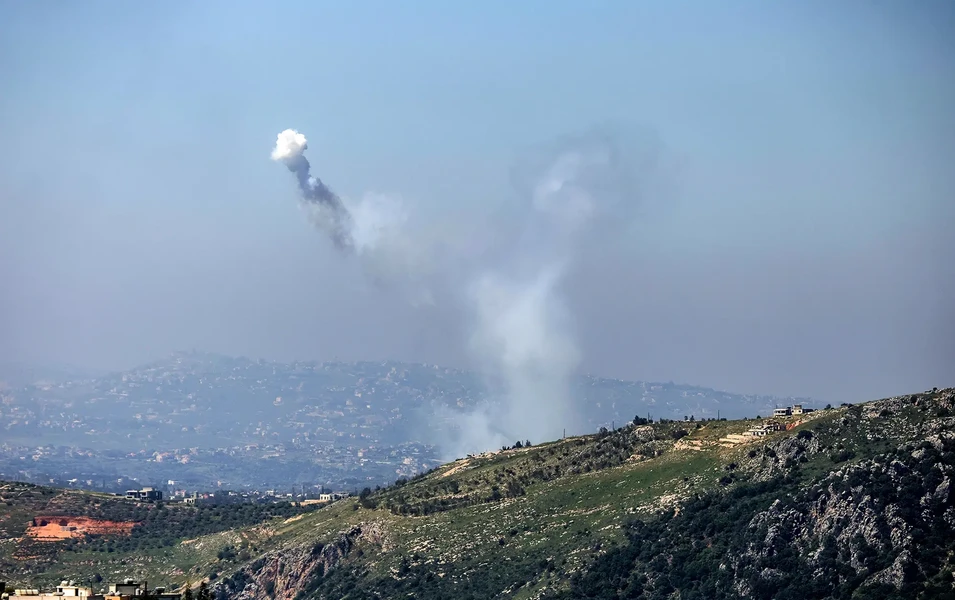
A ceasefire that was never fully observed came under its most serious strain yet this month, as Israeli air strikes killed at least 11 people in southern Lebanon over a single weekend — underscoring how fragile the diplomatic architecture around the Israel-Hezbollah conflict remains even as seven rounds of US-mediated talks have failed to produce a durable de-escalation.
The Weekend Escalation
Israeli air strikes on the towns of Ansar and Deir ez-Zahrani in Nabatieh district killed at least 11 people and wounded 19 on Saturday, August 15, according to the Lebanese Ministry of Health. In Ansar, seven people were killed including three children; the strike on Deir ez-Zahrani killed four and wounded 17 more. Israel later acknowledged civilian casualties in the strikes but accused Hezbollah of “deliberately putting civilians” in a military compound, identifying the women and children among the casualties as family members of a targeted senior Hezbollah commander.
The Israeli military said the strikes on Nabatieh and Ansar came in response to an action against Israeli soldiers at the strategic Ali al-Taher Ridge, where at least three IDF soldiers were seriously wounded. Hezbollah, for its part, has warned that Israel’s attacks would be met with an “appropriate response” and urged the Lebanese government to abandon what it called “humiliating” direct negotiations with Israel and stop relying on US mediation, which it accuses of favouring Israeli interests over Lebanese sovereignty.
Lebanon’s Government Pushes Back
Lebanese Prime Minister Nawaf Salam rejected Israel’s account of the incident, calling the escalation “extremely dangerous” and warning it was undermining efforts to consolidate stability in southern Lebanon. Salam insisted that responsibility for any military infrastructure on Lebanese territory rests exclusively with the Lebanese state, through its army and other institutions, and that Israel has no right to violate Lebanese territory or endanger civilians regardless of what it claims to find there.
Nabih Berri, the speaker of Lebanon’s parliament and a Hezbollah ally, called for national unity and urged the sponsors of the ceasefire and peace talks to assume responsibility for stopping the war before it is too late — a warning that the current diplomatic track may be losing credibility on the Lebanese side even as Israel pushes for the talks to accelerate.
A Ceasefire That Was Never a Ceasefire
The episode illustrates a pattern that has defined the conflict since a conditional truce was agreed in early June: Israeli forces have continued to strike southern Lebanon despite the agreement, and Israel continues to occupy roughly one-fifth of Lebanese territory. A seventh round of US-mediated peace talks began in Rome on August 4, aimed at establishing pilot zones in southern Lebanon from which Israeli forces would begin a phased withdrawal — talks that were already underway when the latest deadly strikes occurred.
Netanyahu spokesman Doron Spielman insisted Israel wants the violence to accelerate rather than derail the negotiations, telling reporters the strikes should “jump-start the talks and make them much more serious, not do the opposite,” and that Israel remains committed to working with the Lebanese armed forces to remove Hezbollah “from the picture.”
A Notable Diplomatic Opening, Even Amid the Violence
The broader relationship between Washington and Beirut has shown signs of a genuine, if fragile, thaw this year. President Trump hosted Lebanese President Joseph Aoun at the White House on July 21 — the first White House visit by a Lebanese president since 2009 — and hours later announced he would allow American carriers to resume direct flights to Lebanon for the first time in over forty years. That gesture stands in sharp contrast to the continued military escalation on the ground, capturing the contradictory signals coming out of the US-Lebanon-Israel triangle this summer.
Why This Matters Beyond Lebanon
The Israel-Hezbollah front is not an isolated conflict — it has become one of the connective threads running through 2026’s global economic story. The same energy-market anxiety driving up Brent crude and keeping UK gilt yields elevated traces partly back to fears that this front could widen into a broader regional conflagration alongside the separate Iran-focused conflict already disrupting the Strait of Hormuz. Each escalation in southern Lebanon adds another layer of uncertainty to an already volatile Middle East risk premium that markets from London to Tokyo have had to price in throughout the year.
Key Takeaways
- Israeli strikes killed at least 11 people, including three children, in southern Lebanon’s Nabatieh district on August 15.
- Israel says the strikes responded to a Hezbollah attack that wounded three IDF soldiers at the Ali al-Taher Ridge.
- A seventh round of US-mediated talks in Rome, aimed at a phased Israeli withdrawal, was already underway when the latest violence occurred.
- Lebanese PM Nawaf Salam called the escalation “extremely dangerous,” while Hezbollah urged Beirut to abandon US-mediated negotiations.
- Despite the violence, US-Lebanon relations have shown a parallel diplomatic opening, including President Aoun’s July White House visit and the resumption of direct US-Lebanon flights.
Frequently Asked Questions
Is there a ceasefire between Israel and Hezbollah? A conditional ceasefire was agreed in early June 2026, but Israeli forces have continued striking southern Lebanon throughout the summer, and Israel continues to occupy roughly a fifth of Lebanese territory.
Why did Israel strike southern Lebanon in mid-August 2026? Israel said the strikes, which killed at least 11 people, were in response to a Hezbollah attack that seriously wounded three Israeli soldiers at the Ali al-Taher Ridge.
What is the status of US-mediated talks between Israel and Lebanon? A seventh round of US-mediated talks began in Rome on August 4, 2026, aimed at establishing pilot zones for a phased Israeli withdrawal from southern Lebanon, though the talks have not yet produced a durable de-escalation.


